
CENTRAL COURT ROOF
Construction and decoration of the Museum roof
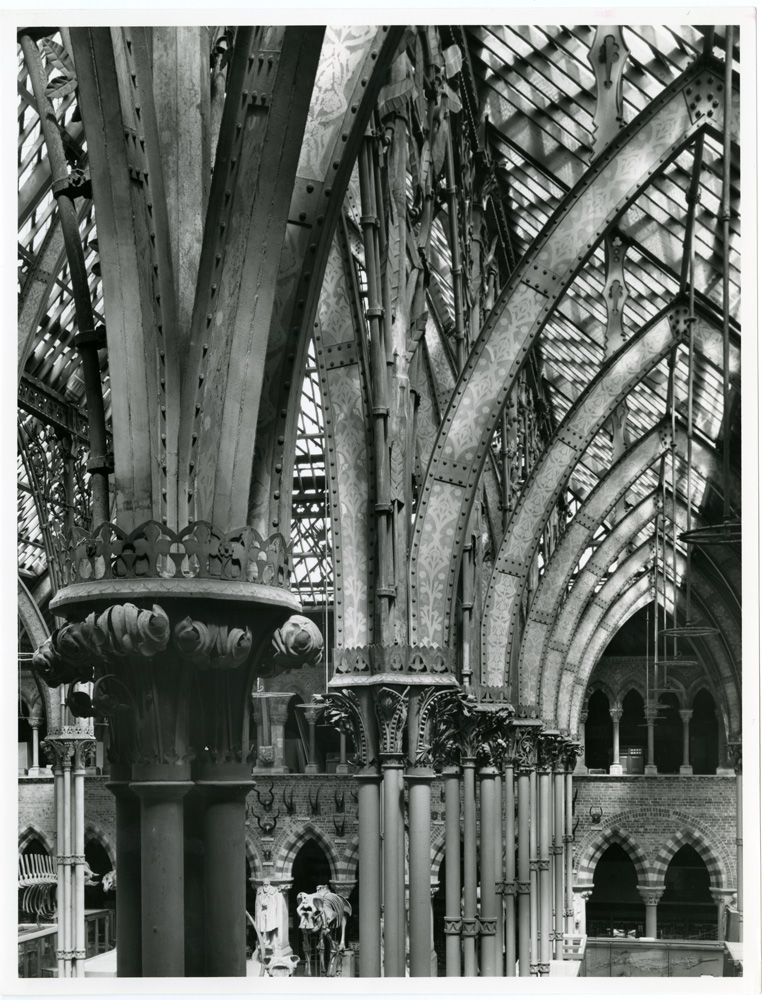

The central court of the Museum is top lit by a glazed roof, supported by clusters of iron columns and girders that divide the space into broad aisles. This innovative space where the University’s natural history collections could be displayed was a key element of the Museum's design.
Structures combining glass and ironwork were developing rapidly in the nineteenth century, encompassing palm houses in Belfast and Kew, railways stations, and most famously the Crystal Palace at South Kensington and Sydenham in south London.
The roof at Oxford was to be an ambitious project engineered for the long-term display of prized, and often vulnerable, museum specimens.
'stronger, more completely water-proof, and durable than the roof of any Railway stations, or the Crystal Palace'
Francis Skidmore (1817-1896), a metalworker based in Coventry, was approached to produce the roof.
The project at Oxford provided Skidmore with his first opportunity to attempt an ironwork roof.
Skidmore was a leading manufacturer of large-scale decorative ironwork as well as being a supplier of small-scale, ready-made domestic and ecclesiastical items.
As well as constructing the roof, Skidmore supplied large quantities of fixtures and fittings that were used throughout the rest of the building. A list from 1858 included hinges of varying sizes, handles for furniture, locks, latches and assorted gas fittings.

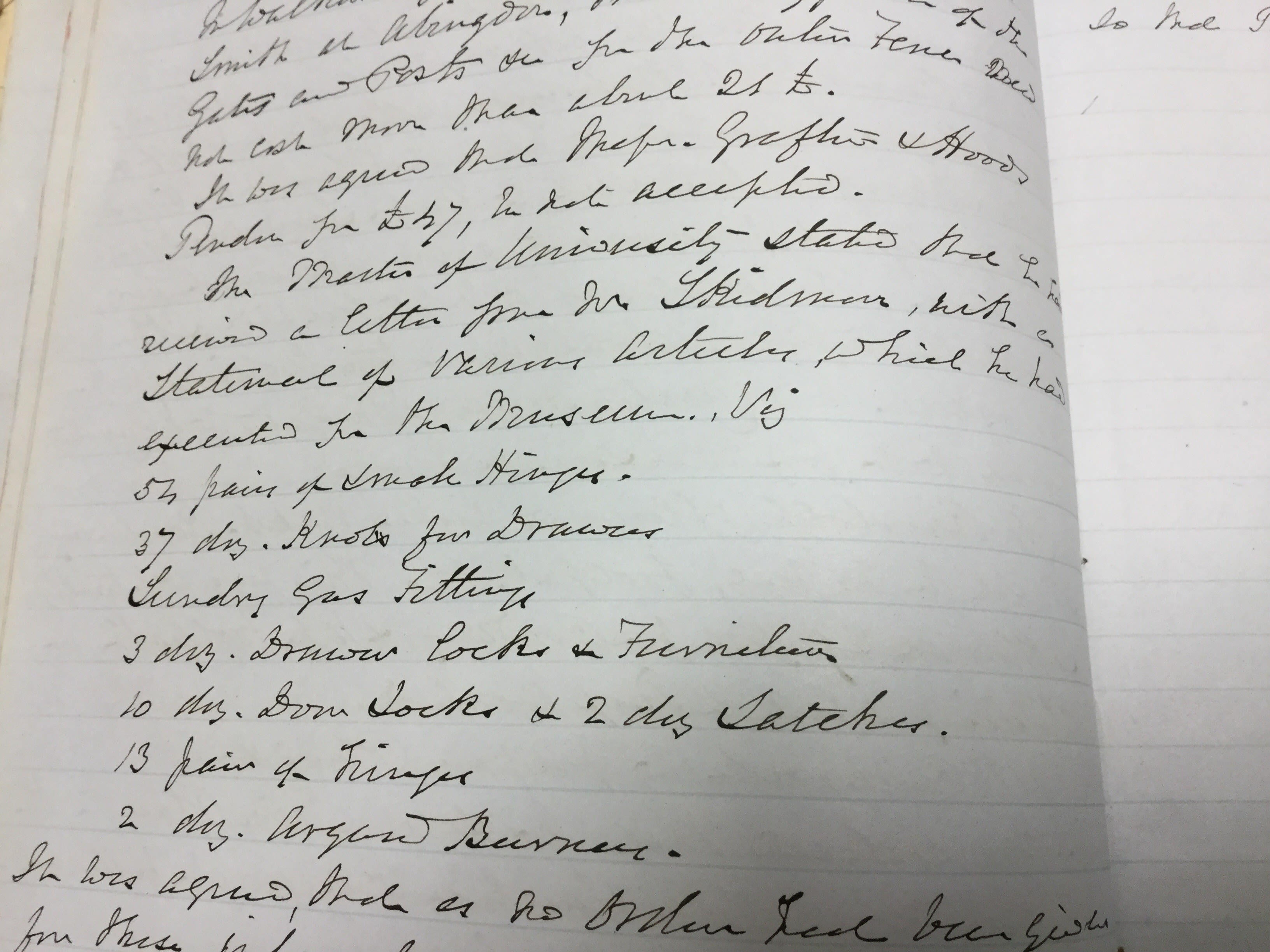
List of fittings supplied by Skidmore, 1858, OUMNH archives
List of fittings supplied by Skidmore, 1858, OUMNH archives


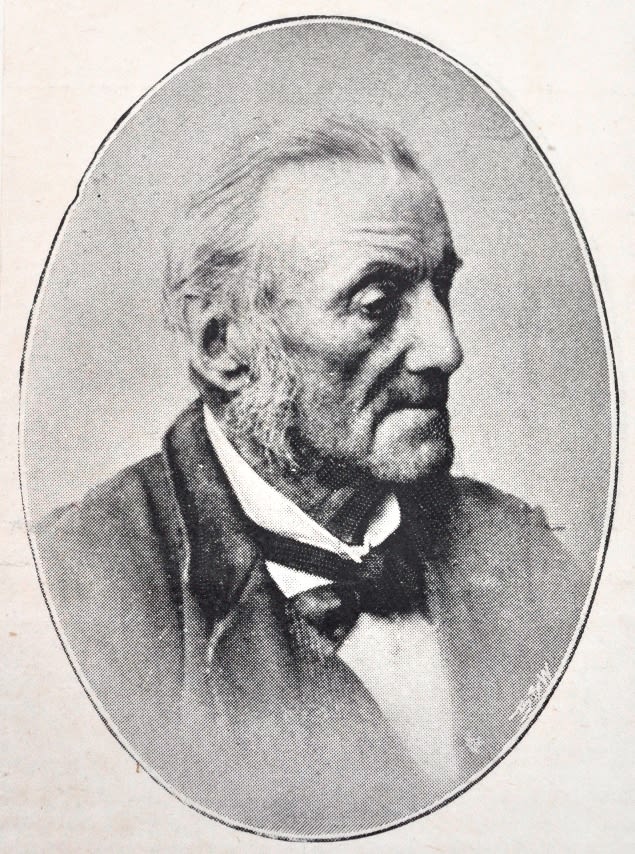
Francis Skidmore (Herbert Art Gallery and Museum via Wikimedia Commons)
Francis Skidmore (Herbert Art Gallery and Museum via Wikimedia Commons)

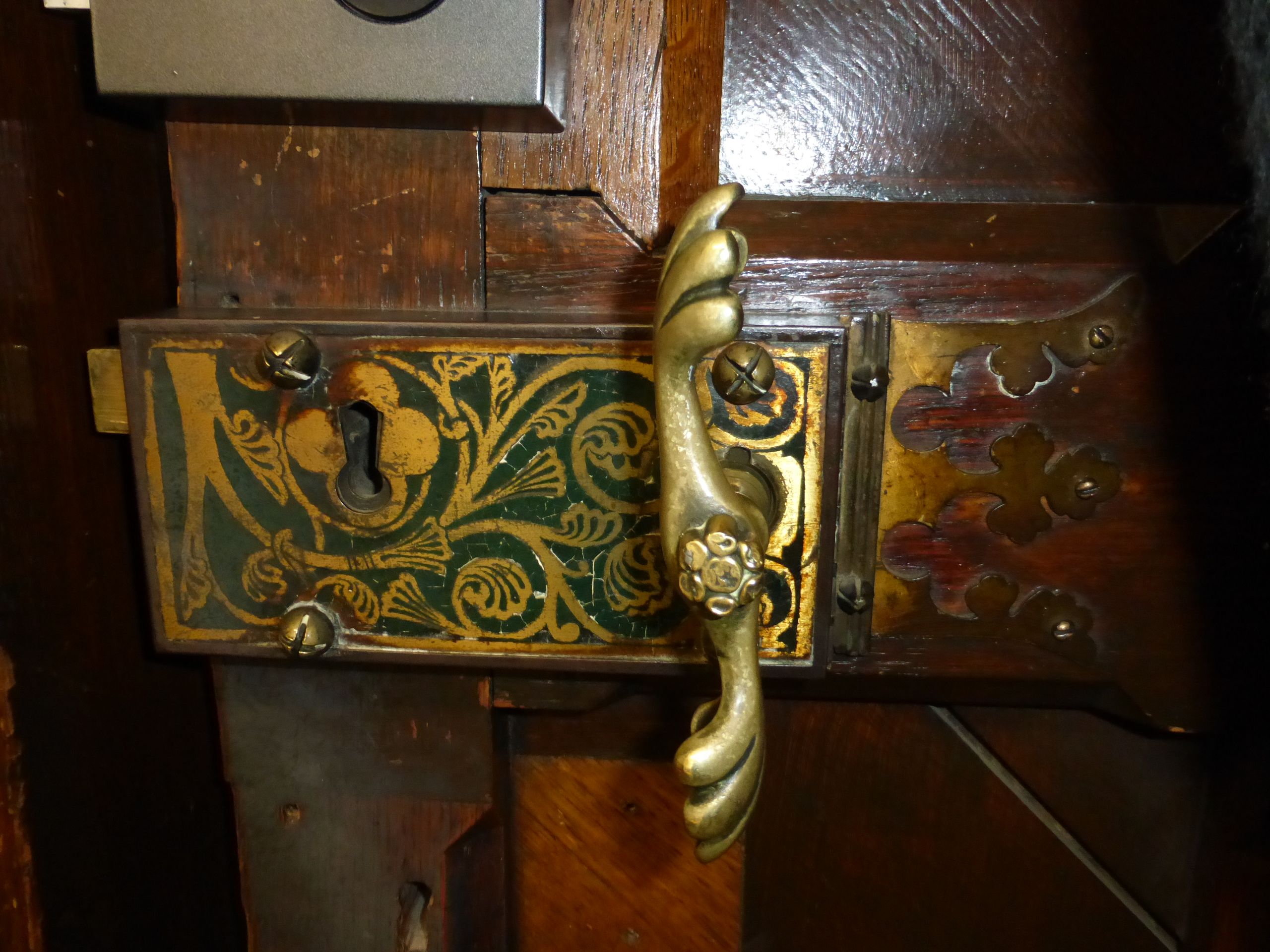
Enamel lock by Francis Skidmore, OUMNH
Enamel lock by Francis Skidmore, OUMNH
Construction
After initial designs by Benjamin Woodward, the architect, Skidmore submitted two designs for the roof. A more expensive option that adhered to the architect’s designs and a cheaper option of his own design.
The Museum's governing body chose the cheaper option, in which Skidmore relied on a structure solely constructed from wrought iron.
Work was underway on the roof by 1857. Between the design phase and the construction, Woodward decided upon thicker glass tiles to ensure that the roof was watertight. This proved too much for the wrought iron structure.
"the iron Columns supporting the Roof of the new museum have in some instances given way"
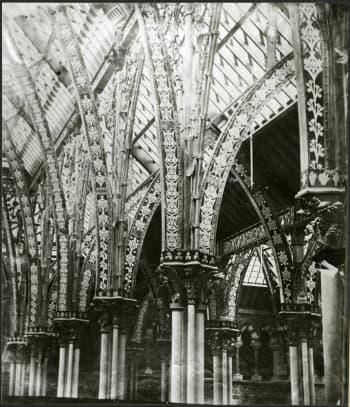
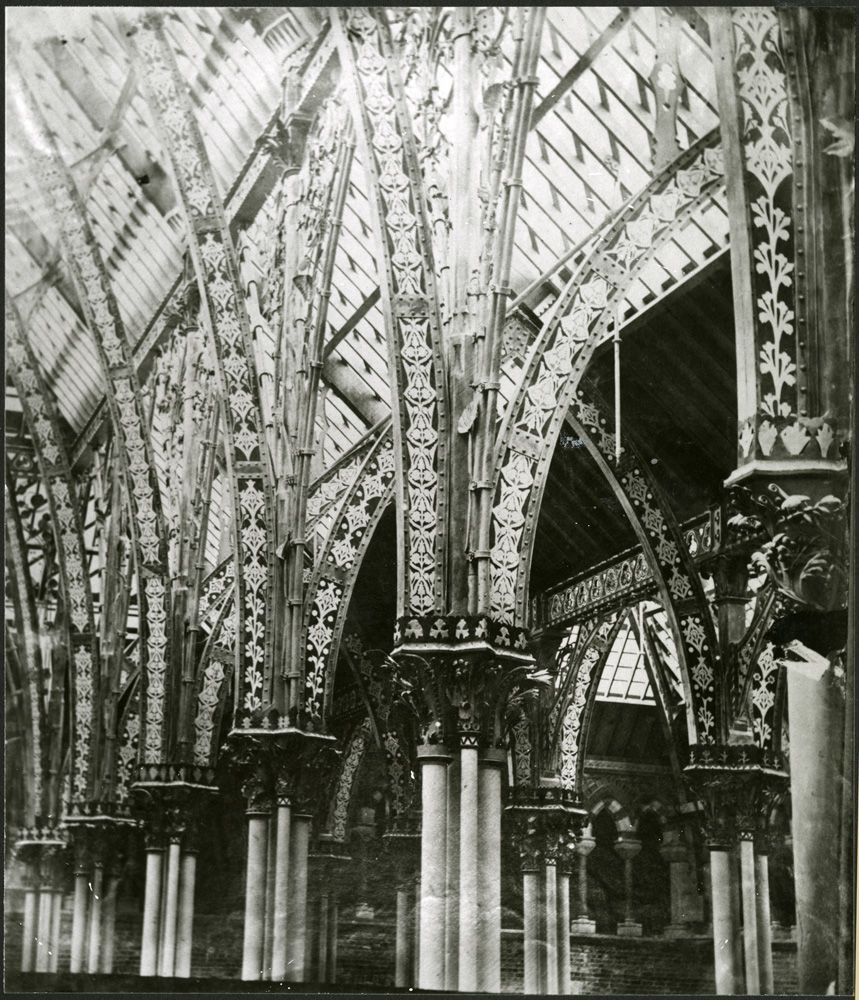
The roof collapsed and an external engineer was brought in to advise. As a result, Skidmore introduced structural cast iron columns, whilst salvaging and reinstating the decorative wrought iron sections. By early 1859, the roof had been rebuilt.

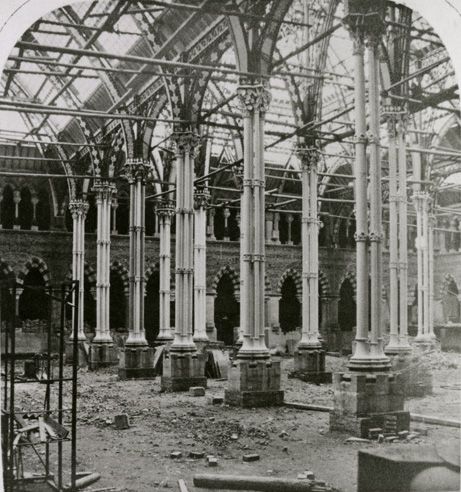
R Fenton, photograph of the second roof, 1858, OUMNH archives
R Fenton, photograph of the second roof, 1858, OUMNH archives
Decorative Metalwork
Botanical Capitals
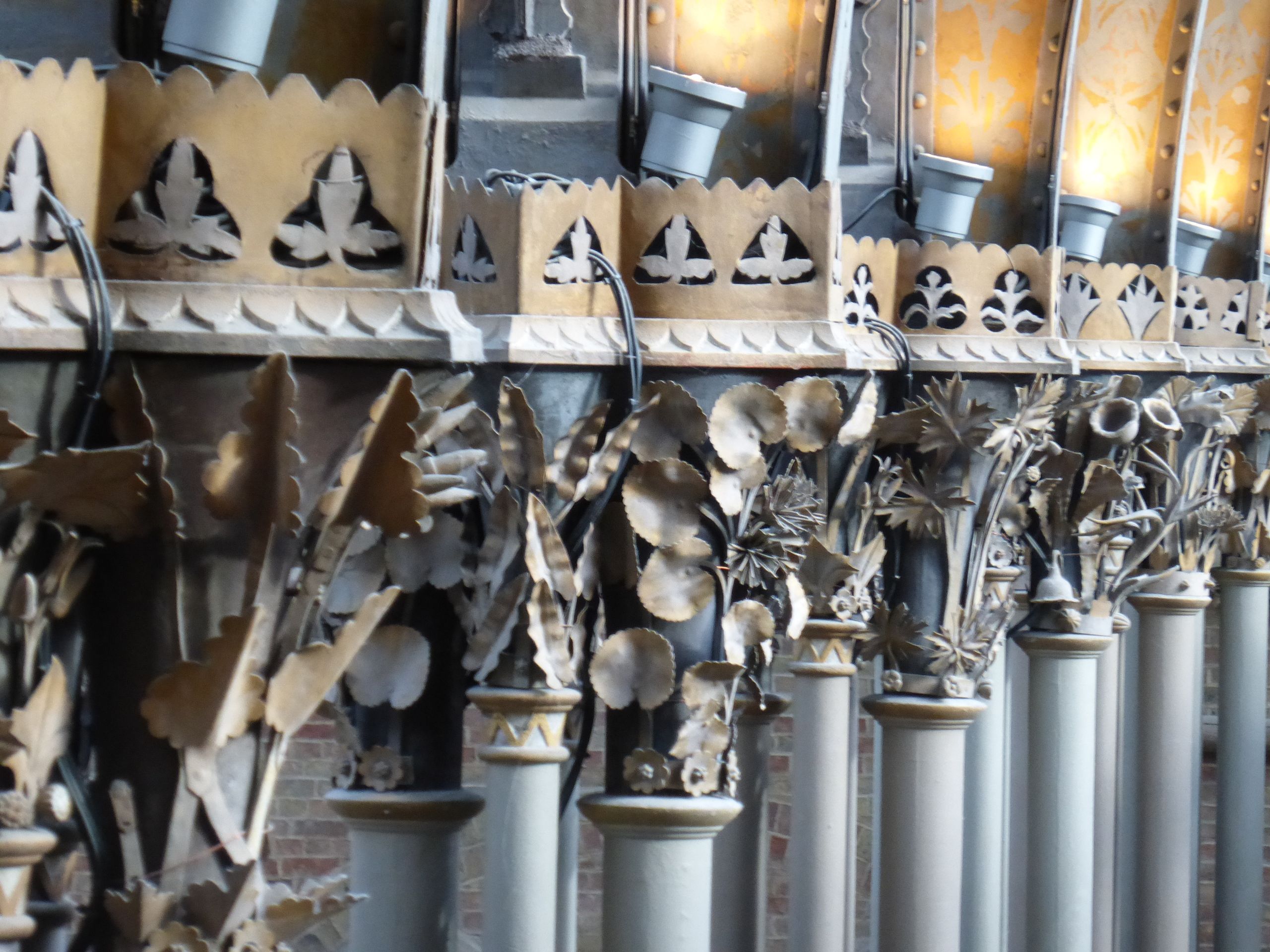
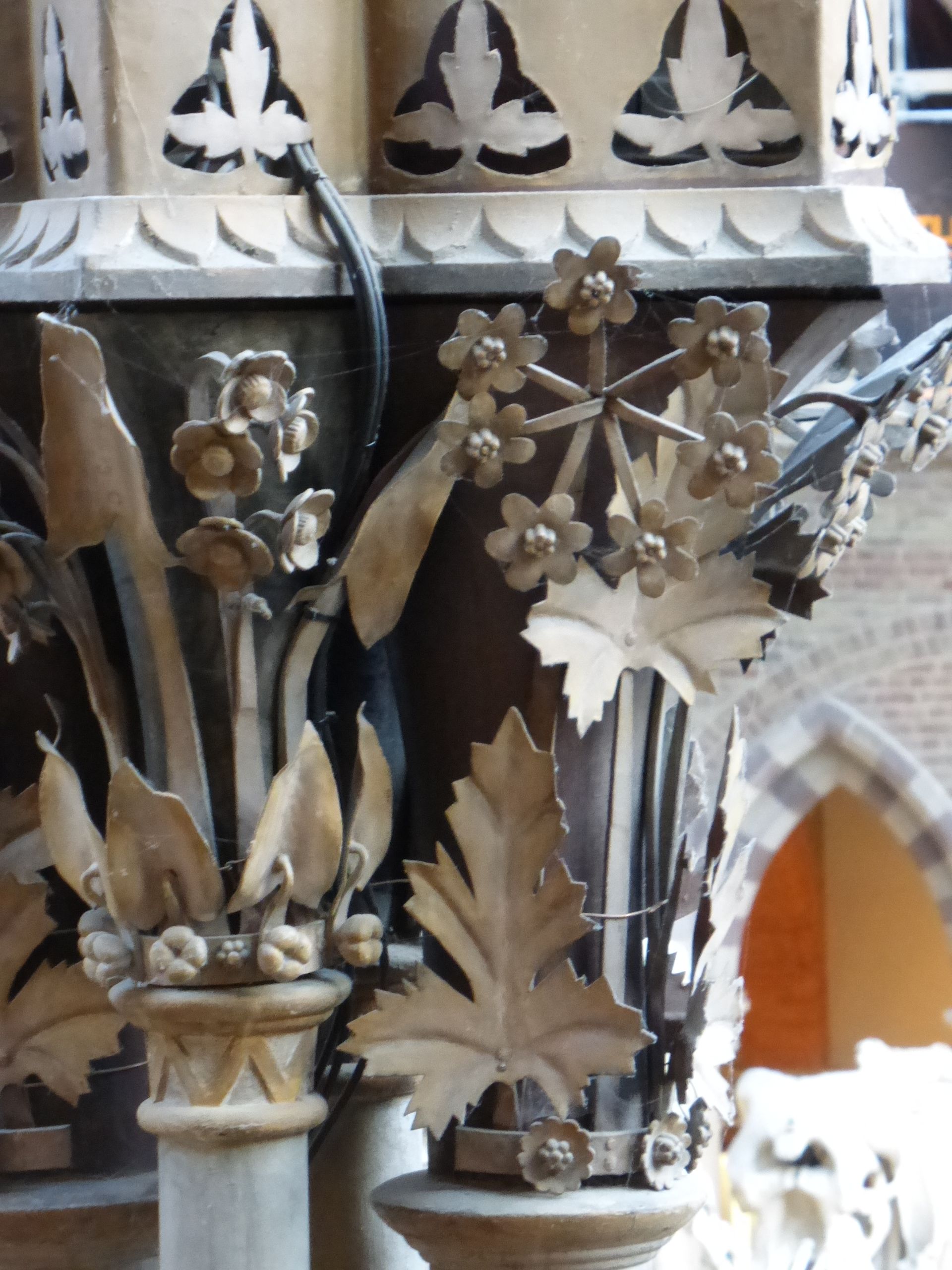
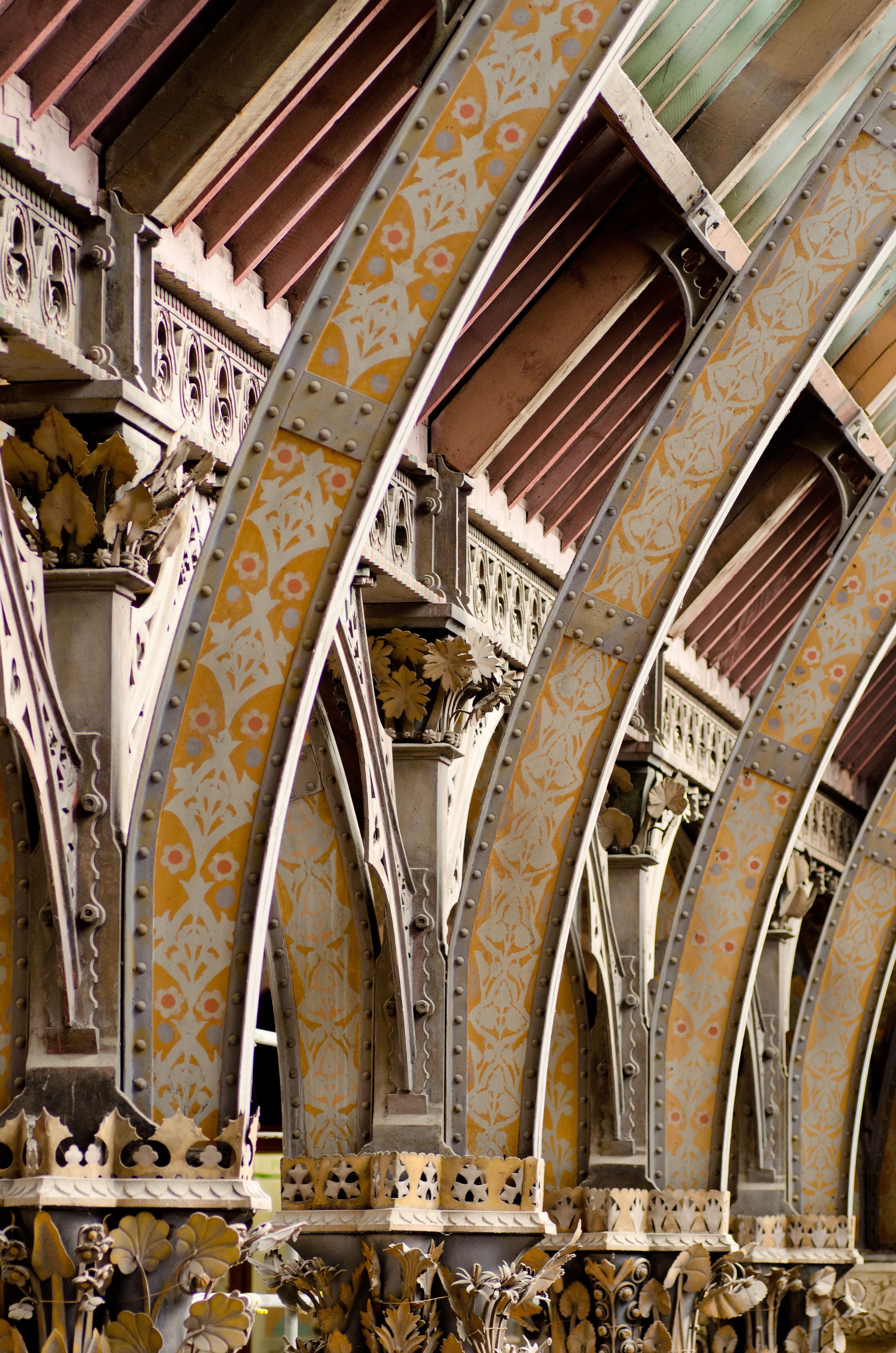
Each cluster of iron columns in the central court is surmounted by a capital profusely decorated with wrought iron flowers and foliage in high relief. Skidmore believed that the ductile nature of metal meant it was ideal to represent plants’ forms.
Some of the decoration depicts recognisable plants, whilst others are stylised.
"in the capitals of the columns we have the water-lily, passion-flower, holly, and other plants, skilfully wrought and arranged"

Spandrels
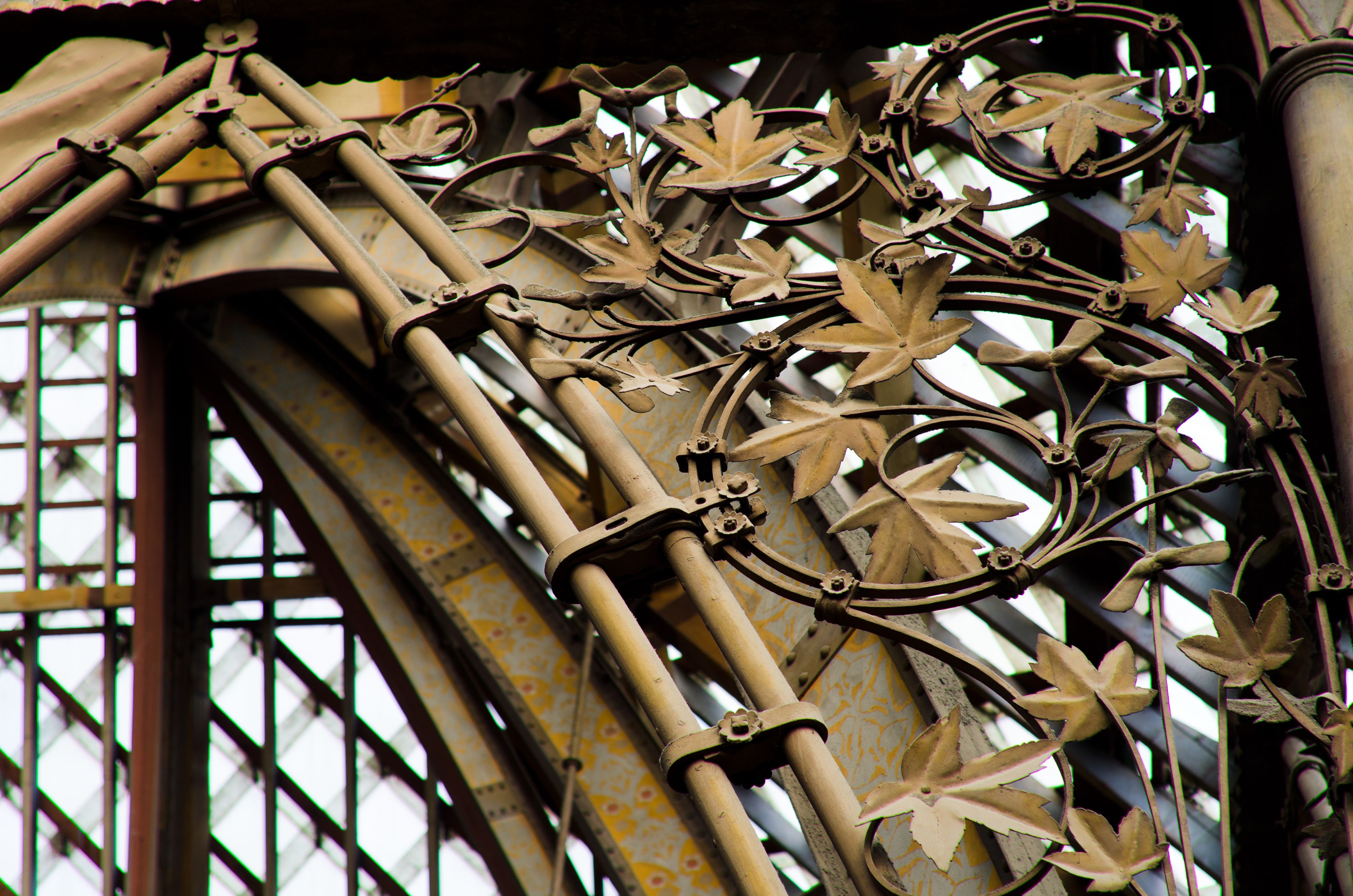
In addition to the capitals, the central aisle of court has sixteen spandrels with botanical decoration.
The majority of the spandrels depict trees. There are spandrels showing the leaves and fruit of Lime, Horse Chestnut, Sycamore, Oak and Pawpaw. There are also different types of Bananas and Palms included in the scheme, as well as a Staghorn Fern and Coltsfoot.
The two-dimensional nature of the spandrels limited Skidmore's aims to show the decorative potential of metalwork and Ruskin was critical that the designs did not reflect the grouping and growth of the plants in nature.

Painted Decoration
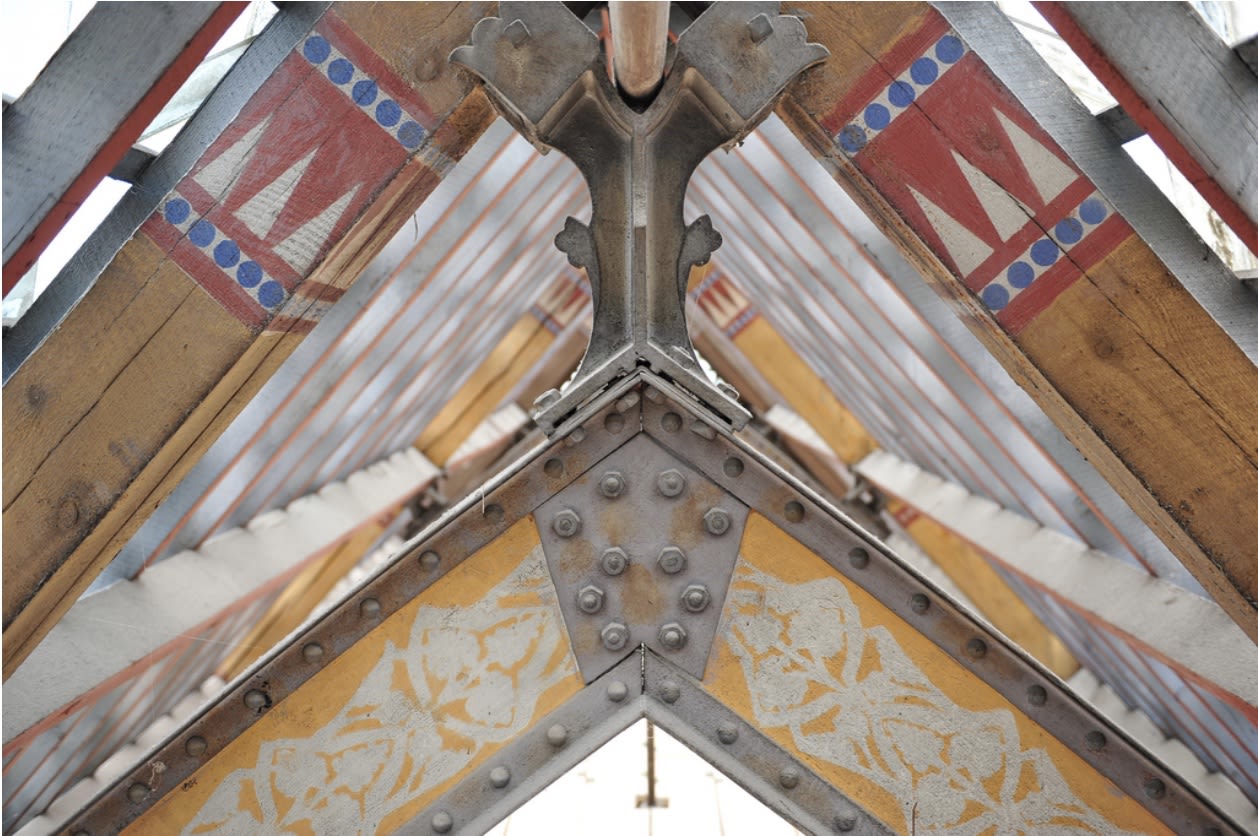
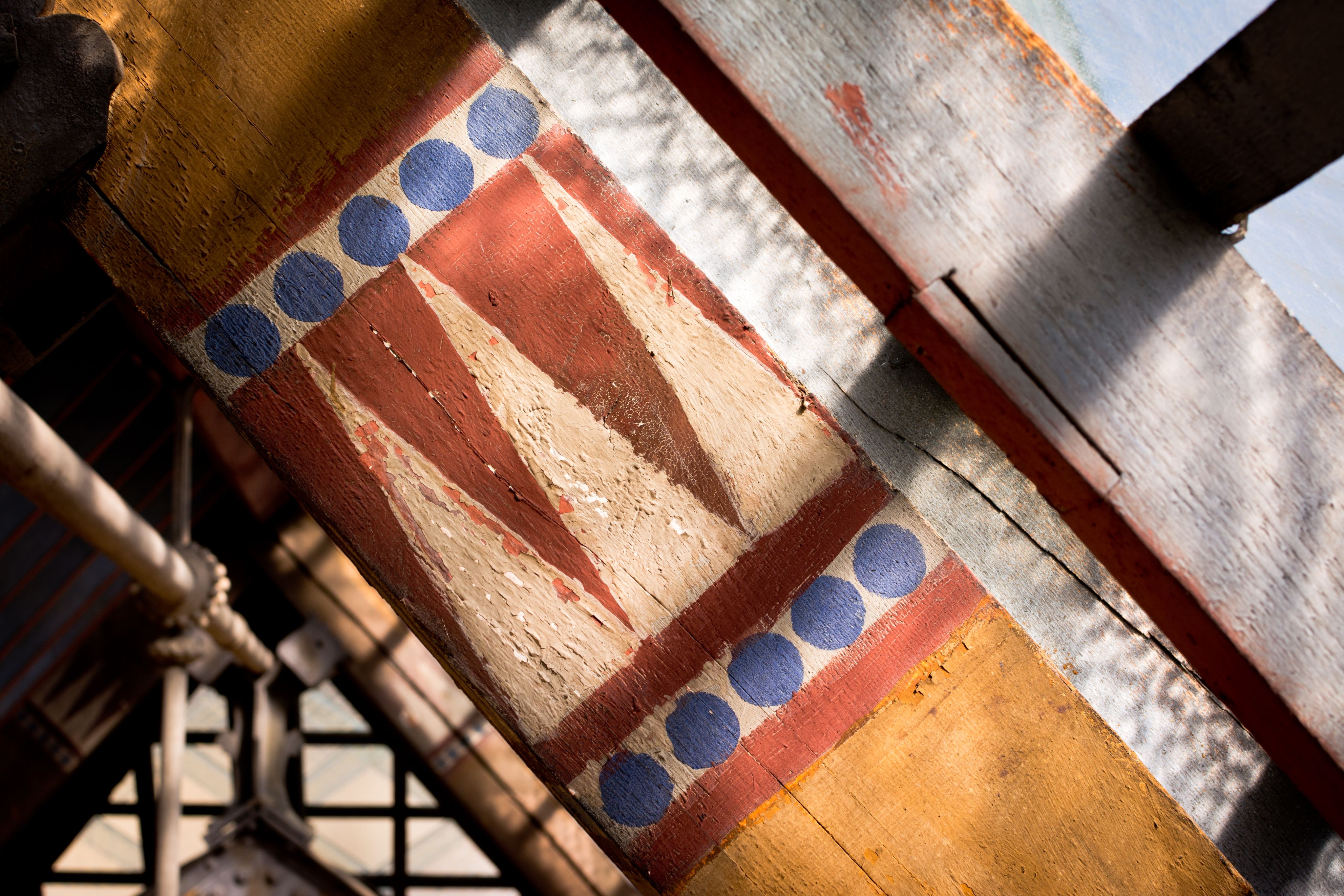
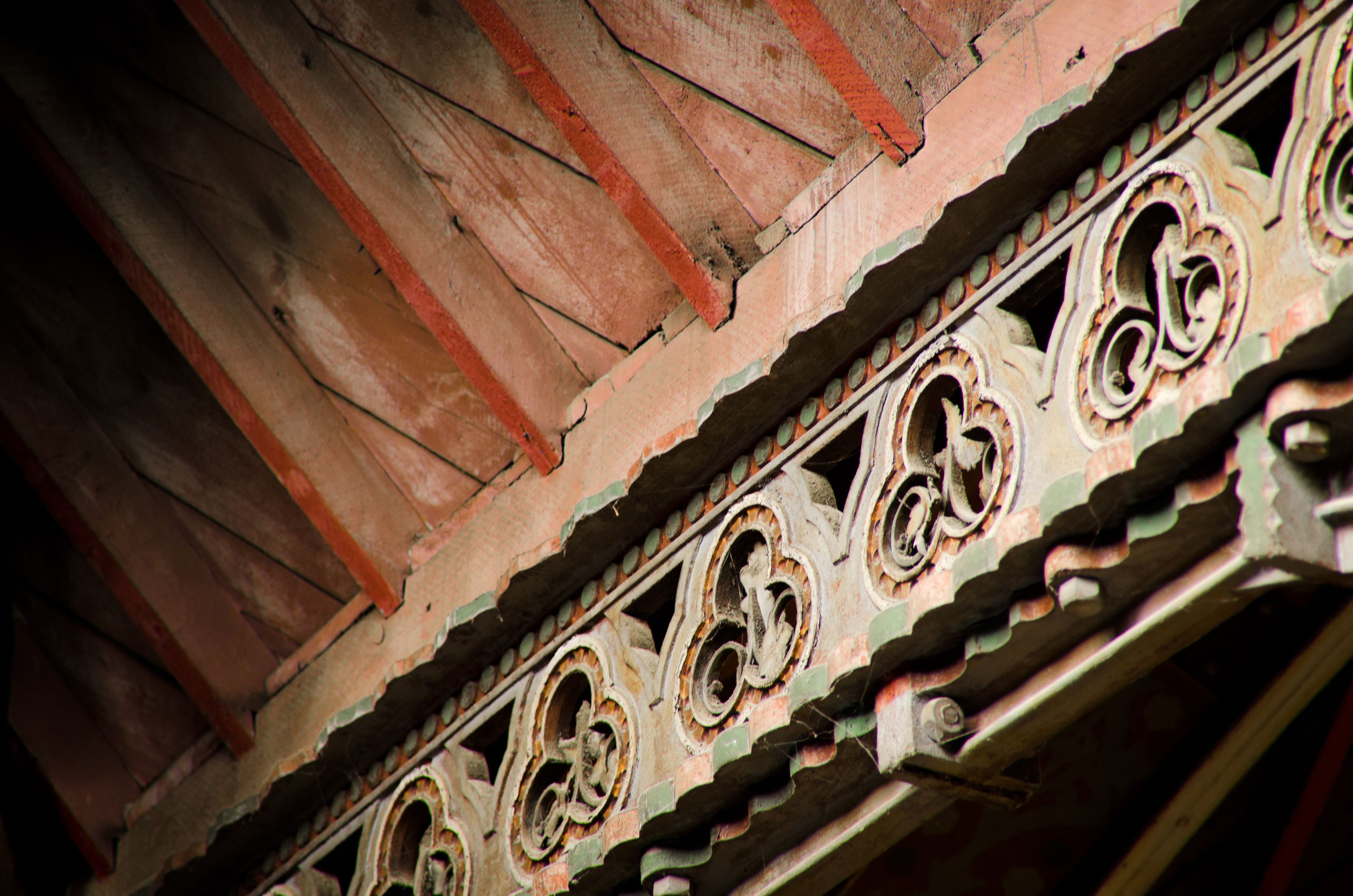
The roof was further embellished with painted decoration. On the arched girders are stencilled repeating patterns – each one with a slight variation - and the woodwork above is painted with bold geometric patterns.
The design and colour scheme of this painted decoration were the subject of much discussion and elicited strong opinions, both from those involved in the project and external commentators. This resulted in multiple experiments to perfect the scheme. Ultimately, it appears that the stencilled designs on the girders by Skidmore remained but the colour scheme was subsequently toned down.
Even the painted decoration on the woodwork of the roof was the subject of debate with letters from Skidmore showing very personal involvement.
"I cannot but feel anxious about the painting of the roof it is indispensable that the colouring should agree with the arches"
A discovery made when the roof was being renovated in 2013 shows that the painting of the roof was altered yet again in 1864, only a few years after the Museum had opened.
Contractors working on the roof discovered a painted inscription on one of the wooden beams which had been hidden for 150 years and reveals the identities of the two decorators.
"This roof was painted by G Thicke & J Randall. April 1864"

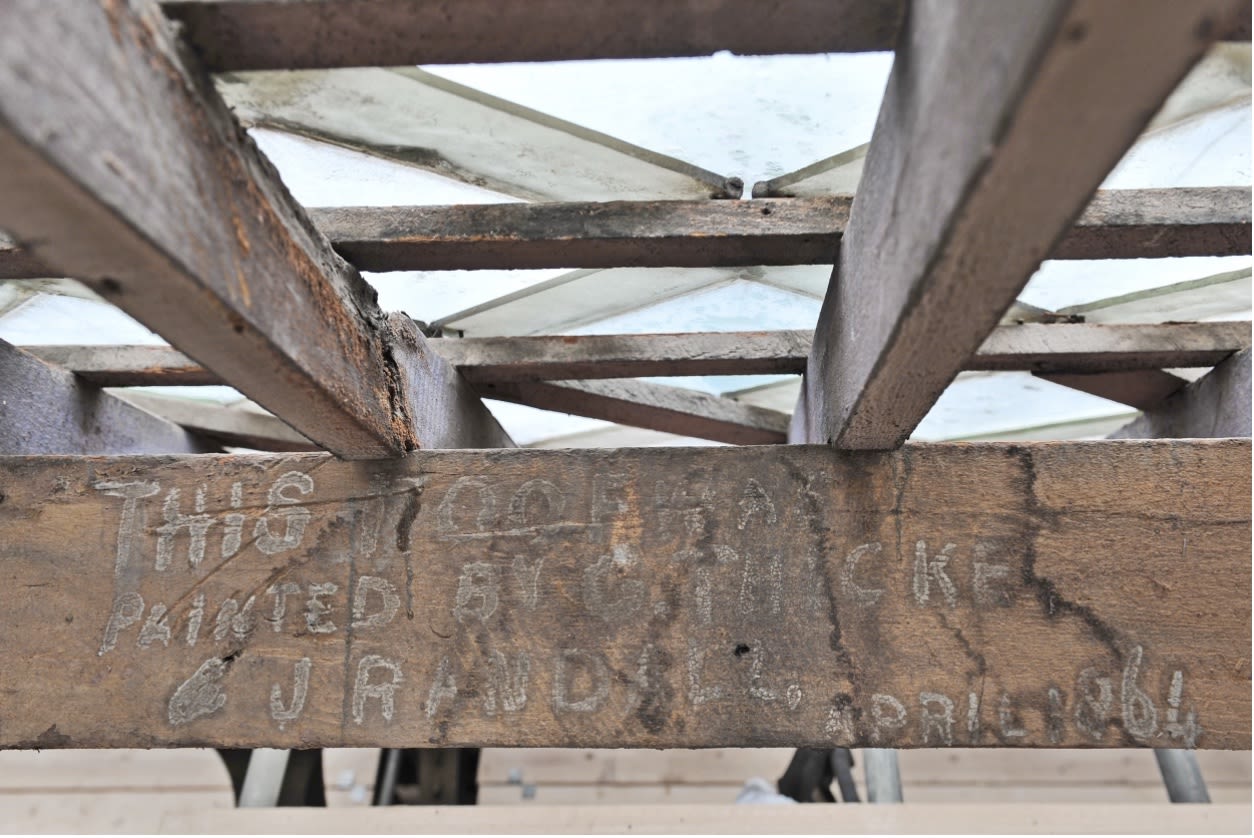
Decorators' signatures on a roof beam
Decorators' signatures on a roof beam
Read more about the life of one of the decorators, George Thicke.





 Built with Shorthand